The following is an excerpt from Chapter 5: Faulty Maps from Nourishing Scotland by our Director Pete Ritchie.
Faulty Map #5 Food redistribution is a solution to food insecurity
Faulty maps are our mental models of the world and thus invisible – just the frame we see the world through. Like the old Mercator projection, they offer a familiar but distorted account of reality.
This map is a little like the famous duck-rabbit diagram described by Wittgenstein in Philosophical Investigations. Look at it one way, it is an environmental issue, and look at it the other way, it is a poverty issue. For example, the Coronation Food Project ‘seeks to bridge the gap between food waste and food need.’
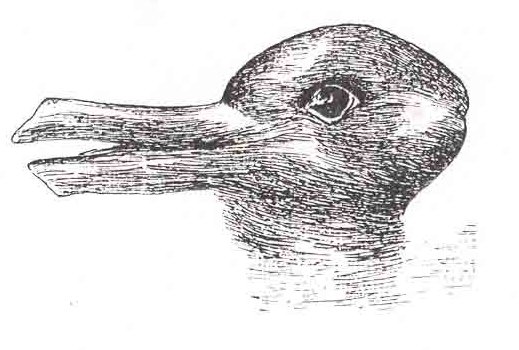
However, when you pull the duck and rabbit apart, food redistribution is a modestly effective environmental duck and a poverty rabbit which does more harm than good. The UK has a highly organised food redistribution system, estimated to find a home for 170,000t of surplus food in 2023. That is about 1.5% of the 10.7Mt of food wasted. But 170,000t is still a result.
However, from an environmental perspective, it does not matter which humans eat the food. The reason it gets redistributed through charities, rather than being served in the House of Commons canteen or Michelin starred restaurants, is because the recipients of charity do not have the luxury of choice.
Which is why the poverty rabbit does more harm than good. It is not just that food redistribution does not have a discernible impact on reducing food insecurity at a population level. It is that this map, this merging of the duck and rabbit, allows redistribution to stand in for serious efforts to tackle food insecurity while creating a good feeling for its patrons. It entrenches a two-tier system. It substitutes charity for the right to food.
So, what is a better map of this territory?
First, of course, continue to reduce food waste at source – something on which UK retailers, especially Tesco have made good progress, though there has been less progress in other parts of the supply chain.
Second, develop secondary markets for surplus food such as Company Shop, and explore innovative ways to valorise food surplus including biorefinery for nutraceuticals.
Third, charge retailers for every tonne redistributed; currently they save the costs of collection and gate fees for alternative disposal while the charities who receive the surplus food pay a fee.
Fourth, ensure that redistributed food meets Government buying standards, like any other food which is part of the public system.
Fifth, use redistributed food in the public kitchen such as school meals, residential homes, hospitals, public diners, and use any savings to give caterers more scope to buy more organic food and a wider range of quality ingredients. If the food we are redistributing is good enough for people, then it is good enough for all of us.
And finally, improve incomes – take a cash first approach, and end the need for food banks.